Tuesday, November 30, 2004

...The Quran on the Cerebrum...

God has said in the Quran about one of the evil unbelievers who forbade the Prophet Muhammad from praying at the Kaabah:

No! If he does not stop, We will take him by the naseyah (front of the head),a lying, sinful naseyah (front of the head)!(Quran,Surah Al-'Alaq:15-16)

Why did the Quran describe the front of the head as being lying and sinful? Why didn’t the Quran say that the person was lying and sinful? What is the relationship between the front of the head and lying and sinfulness?

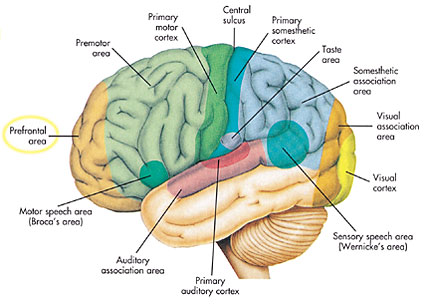
If we look into the skull at the front of the head, we will find the prefrontal area of the cerebrum (see figure 12). What does physiology tell us about the function of this area? A book entitled Essentials of Anatomy & Physiology says about this area, “The motivation and the foresight to plan and initiate movements occur in the anterior portion of the frontal lobes, the prefrontal area. This is a region of association cortex...” Also the book says, “In relation to its involvement in motivation, the prefrontal area is also thought to be the functional center for aggression....


Figure 12: Functional regions of the left hemisphere of the cerebral cortex. The prefrontal area is located at the front of the cerebral cortex. (Essentials of Anatomy & Physiology, Seeley and others, p. 210.)

So, this area of the cerebrum is responsible for planning, motivating, and initiating good and sinful behavior and is responsible for the telling of lies and the speaking of truth. Thus, it is proper to describe the front of the head as lying and sinful when someone lies or commits a sin, as the Quran has said, “...A lying, sinful naseyah (front of the head)!”

Scientists have only discovered these functions of the prefrontal area in the last sixty years, according to Professor Keith L. Moore.

*Dipetik dari islam-guide.com

*Next episode..."The Quran on the Origin of the Universe"

Thursday, November 25, 2004

...The Quran on Seas and Rivers...

Modern Science has discovered that in the places where two different seas meet,there is a barrier between them. This barrier divides the two seas so that each sea has its own temperature, salinity, and density.

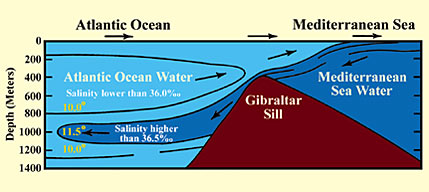
For example, Mediterranean sea water is warm, saline, and less dense, compared to Atlantic ocean water. When Mediterranean sea water enters the Atlantic over the Gibraltar sill,it moves several hundred kilometers into the Atlantic at a depth of about 1000 meters with its own warm, saline,and less dense characteristics.The Mediterranean water stabilizes at this depth(see figure 13).


Figure 13: The Mediterranean sea water as it enters the Atlantic over the Gibraltar sill with its own warm, saline, and less dense characteristics, because of the barrier that distinguishes between them. Temperatures are in degrees Celsius (C°). (Marine Geology, Kuenen, p. 43, with a slight enhancement.)

Although there are large waves, strong currents, and tides in these seas, they do not mix or transgress this barrier.

The Holy Quran mentioned that there is a barrier between two seas that meet and that they do not transgress.

God has said:

He has set free the two seas meeting together.There is a barrier between them.They do not transgress. (Quran,Ar-Rahman:19-20)


But when the Quran speaks about the divider between fresh and salt water, it mentions the existence of “a forbidding partition” with the barrier.

God has said in the Quran:

He is the one who has set free the two kinds of water,one sweet and palatable, and the other salty and bitter.And He has made between them a barrier and a forbidding partition.(Quran,AlFurqan:53)

One may ask, why did the Quran mention the partition when speaking about the divider between fresh and salt water, but did not mention it when speaking about the divider between the two seas?

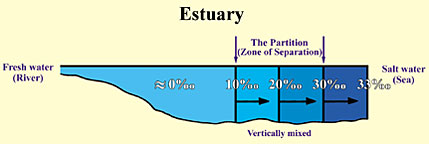
Modern science has discovered that in estuaries, where fresh (sweet) and salt water meet, the situation is somewhat different from what is found in places where two seas meet. It has been discovered that what distinguishes fresh water from salt water in estuaries is a “pycnocline zone with a marked density discontinuity separating the two layers.” This partition (zone of separation) has a different salinity from the fresh water and from the salt water (see figure 14).


Figure 14: Longitudinal section showing salinity (parts per thousand ‰) in an estuary. We can see here the partition (zone of separation) between the fresh and the salt water. (Introductory Oceanography, Thurman, p. 301, with a slight enhancement.)

This information has been discovered only recently, using advanced equipment to measure temperature, salinity, density, oxygen dissolubility, etc.the human eye cannot see the difference between the two seas that meet, rather the two seas appear to us as one homogeneous sea. Likewise, the human eye cannot see the division of water in estuaries into the three kinds: fresh water, salt water, and the partition (zone of separation).

Sumber:Islam-guide.com

*Next Episode..."The Quran on the Cerebrum"

Saturday, November 20, 2004

...The Quran on Deep Seas and Internal Waves...

God has said in the Quran:

Or (the unbelievers’ state) is like the darkness in a deep sea. It is covered by waves, above which are waves, above which are clouds. Darknesses, one above another. If a man stretches out his hand, he cannot see it.... (Quran,Surah An-Nur:40)

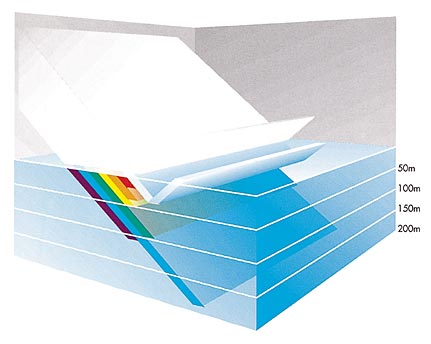
This verse mentions the darkness found in deep seas and oceans, where if a man stretches out his hand, he cannot see it. The darkness in deep seas and oceans is found around a depth of 200 meters and below. At this depth, there is almost no light (see figure 15). Below a depth of 1000 meters there is no light at all. Human beings are not able to dive more than forty meters without the aid of submarines or special equipment. Human beings cannot survive unaided in the deep dark part of the oceans, such as at a depth of 200 meters.


Figure 15: Between 3 and 30 percent of the sunlight is reflected at the sea surface. Then almost all of the seven colors of the light spectrum are absorbed one after another in the first 200 meters, except the blue light. (Oceans, Elder and Pernetta, p. 27.)

Scientists have recently discovered this darkness by means of special equipment and submarines that have enabled them to dive into the depths of the oceans.

We can also understand from the following sentences in the previous verse, “...in a deep sea. It is covered by waves, above which are waves, above which are clouds....”, that the deep waters of seas and oceans are covered by waves, and above these waves are other waves.
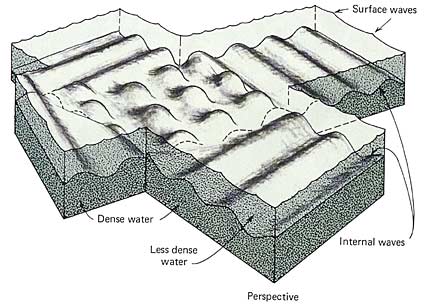
It is clear that the second set of waves are the surface waves that we see, because the verse mentions that above the second waves there are clouds. But what about the first waves? Scientists have recently discovered that there are internal waves which “occur on density interfaces between layers of different densities.” (see figure 16).


Figure 16: Internal waves at interface between two layers of water of different densities. One is dense (the lower one), the other one is less dense (the upper one). (Oceanography, Gross, p. 204.)

The internal waves cover the deep waters of seas and oceans because the deep waters have a higher density than the waters above them. Internal waves act like surface waves. They can also break, just like surface waves. Internal waves cannot be seen by the human eye, but they can be detected by studying temperature or salinity changes at a given location.

*Next episode..."The Quran on Seas and Rivers"

Sunday, November 14, 2004

...The Quran on Human Embryonic Development...

In the Holy Quran, God speaks about the stages of man’s embryonic development:

We created man from an extract of clay. Then We made him as a drop in a place of settlement, firmly fixed. Then We made the drop into an alaqah (leech, suspended thing, and blood clot), then We made the alaqah into a mudghah (chewed substance)... 1 (Quran,Surah Al-mukminun:12-14)

Literally, the Arabic word alaqah has three meanings: (1) leech, (2) suspended thing, and (3) blood clot.

In comparing a leech to an embryo in the alaqah stage, we find similarity between the two2 as we can see in figure 1. Also, the embryo at this stage obtains nourishment from the blood of the mother, similar to the leech, which feeds on the blood of others.3

Figure 1
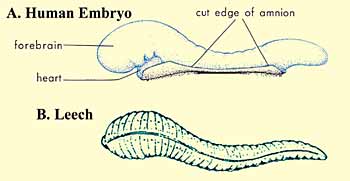

Figure 1: Drawings illustrating the similarities in appearance between a leech and a human embryo at the alaqah stage. (Leech drawing from Human Development as Described in the Quran and Sunnah, Moore and others, p. 37, modified from Integrated Principles of Zoology, Hickman and others. Embryo drawing from The Developing Human, Moore and Persaud, 5th ed., p. 73.)

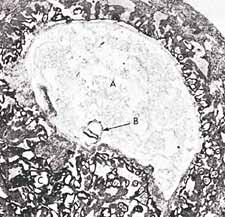
The second meaning of the word alaqah is “suspended thing.” This is what we can see in figures 2 and 3, the suspension of the embryo, during the alaqah stage, in the womb of the mother.

Figure 2: We can see in this diagram the suspension of an embryo during the alaqah stage in the womb (uterus) of the mother. (The Developing Human, Moore and Persaud, 5th ed., p. 66.)

Figure 2
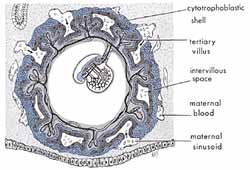


Figure 3: In this photomicrograph, we can see the suspension of an embryo (marked B) during the alaqah stage (about 15 days old) in the womb of the mother. The actual size of the embryo is about 0.6 mm. (The Developing Human, Moore, 3rd ed., p. 66, from Histology, Leeson and Leeson.)


Figure 3

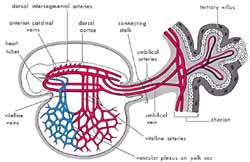
The third meaning of the word alaqah is “blood clot.” We find that the external appearance of the embryo and its sacs during the alaqah stage is similar to that of a blood clot. This is due to the presence of relatively large amounts of blood present in the embryo during this stage4 (see figure 4). Also during this stage, the blood in the embryo does not circulate until the end of the third week.5 Thus, the embryo at this stage is like a clot of blood.


Figure 4
: Diagram of the primitive cardiovascular system in an embryo during the alaqah stage. The external appearance of the embryo and its sacs is similar to that of a blood clot, due to the presence of relatively large amounts of blood present in the embryo. (The Developing Human, Moore, 5th ed., p. 65.)

Figure 4

So the three meanings of the word alaqah correspond accurately to the descriptions of the embryo at the alaqah stage.

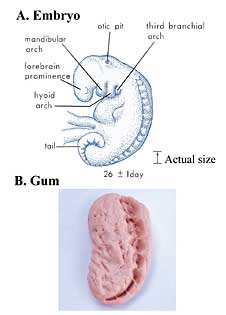
The next stage mentioned in the verse is the mudghah stage. The Arabic word mudghah means “chewed substance.” If one were to take a piece of gum and chew it in his or her mouth and then compare it with an embryo at the mudghah stage, we would conclude that the embryo at the mudghah stage acquires the appearance of a chewed substance. This is because of the somites at the back of the embryo that “somewhat resemble teethmarks in a chewed substance.”6 (see figures 5 and 6).

Figure 5: Photograph of an embryo at the mudghah stage (28 days old). The embryo at this stage acquires the appearance of a chewed substance, because the somites at the back of the embryo somewhat resemble teeth marks in a chewed substance. The actual size of the embryo is 4 mm. (The Developing Human, Moore and Persaud, 5th ed., p. 82, from Professor Hideo Nishimura, Kyoto University, Kyoto, Japan.)

Figure 5
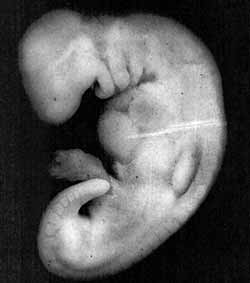

Figure 6: When comparing the appearance of an embryo at the mudghah stage with a piece of gum that has been chewed, we find similarity between the two.
A) Drawing of an embryo at the mudghah stage. We can see here the somites at the back of the embryo that look like teeth marks. (The Developing Human, Moore and Persaud, 5th ed., p. 79.)
B) Photograph of a piece of gum that has been chewed.

Figure 6

In 1981, during the Seventh Medical Conference in Dammam, Saudi Arabia, Professor Moore said: “It has been a great pleasure for me to help clarify statements in the Quran about human development. It is clear to me that these statements must have come to Muhammad from God, because almost all of this knowledge was not discovered until many centuries later. This proves to me that Muhammad must have been a messenger of God.To view the realplayer video,click here.

sumber:islam-guide.com

next episode...."The Quran on Deep Seas and Internal Waves"
Saturday, November 13, 2004

.....Muhasabah diri bagi org yg menghafal AlQuran....

*Mata kita selalu melihat AlQuran,
tapi dgn mata ini juga kita selalu melakukan zina mata,
Telinga ini selalu mendengar kalam Allah,
tapi dgn telinga ini juga kita selalu mendengar apa yg bertentangan dgn Kata2 Allah,
Mulut ini sentiasa membaca KalamNya,
Tapi sering juga mulut ini mengumpat,membuka aib org,berbual dgn lelaki pd perkara2 yg tidak perlu,
Jari-jemari kita sentiasa memegang Mushaf AlQuran,
Tapi dgnnya juga kita selalu SMS dgn lelaki tentang perkara2 yg sia-sia...

*Solat malam adalah warisan bagi org yg menghafal AlQuran.

*Tasmik dgn Guru akan hafalan adalah tanggungjawab kita dgn guru,
Murajaah/ulang semula akan apa yg telah dihafal tanggungjawab kita dgn Tuhan...

*Sehari kita tinggalkan AlQuran,
Seminggu AlQuran meninggalkan kita,
Sebulan kita tinggalkan AlQuran,
Setahun AlQuran meninggalkan kita..

*Walaumacamana sibuk kita dgn pelajaran sekolah,
Utamakan tanggungjawab kita dgn AlQuran dahulu,
Krn apabila kita utamakan AlQuran,
Allah akan mengajar kita krn ilmu itu datang dariNya,
dan akan mempermudahkan segala urusan kita...

*Sejauh mana kita sudah bersusah payah untuk AlQuran????

*Adakah kita selalu meninggalkan tidur kita semata-mata utk murajaah hafalan kita??

*Sudahkah kita berahklak dgn Akhlak AlQuran sedangkan setiap siang dan mlm kita membacanya??

*Jgn sesekali kita berani ucapkan yg kita ni cintakan AlQuran,
sedangkan kita tak sanggup bersusah payah utk AlQuran,
perbuatan kita selalu bertentangan dgnnya..


Malulah kita dgn AlQuran terutama lagi dgn Pencipta kita ........


Thursday, November 04, 2004

....Tips utk bertahajjud....

Tahajjud merupakan ibadah yg dilakukan pd waktu sepertiga malam iaitu dlm kul 2.00 hingga sblm terbitnya fajar.Sbg seorang penuntut ilmu khususnya,kita sepatutnya menjadikan solat malam dan baca Quran sbg amalan harian kita,terutamanya pelajar madrasah.Sibuk macamana pon,Jgn miss baca quran krn disitu ade keberkahannya.Krn yg kita sdg membawa bersama kita itu ilmu ugama,bila ilmu ugama dah bertambah,tanggungjawab kita pon semakin berat.

Ilmu itu datangya dari Allah dan melalui perantaraan manusia iaitu guru kita.Dlm surah AlBaqarah ade menyebutkan yg bermaksud:bertakwalah kamu kpd Allah,nescaya Allah akan mengajar kamu.Dgn kita bertahajjud,kita berharap agar Allah akan berikan kita hikmah dlm menuntut ilmu dan mampu memikul tanggungjawab yg ada diatas bahu kita ni.

Mengapa Allah menyuruh Nabi supaya bertahajjud?

jawapannya ialah krn Nabi sedang membawa amanah yg berat iaitu menyebar agama Allah iaitu Islam dan terpaksa menghadapi segala tentangan kaum musyrikin.Firman Allah yg bermaksud:Sesungguhnya Kami akan menurunkan kpdmu(Rasulullah)perkataan yg berat(surah Almuzzammil:5).Jadi dgn melakukan solat malam,ia dapat menguatkan lagi kekuatan dirinya agar tabah dlm menghadapi segala tentangan dan tanggungjawab yg dipikulnya.

Firman Allah yg bermaksud:Sesungguhnya kami telah mengemukakan amanah iaitu tugas2 keagamaan kpd langit,bumi dan gunung2,maka semuanya enggan utk memikulnya dan khuatir akan mengkhianatinya,dan dipikullah amanah itu oleh manusia.sesungguhnya manusia itu amat zalim dan amat jahil.(surah Al-Ahzab:72)

Satu misal camna dgn bertakwa kpd Allah,Allah mengajar kita.Cuba kita lihat contoh ulama2 terdahulu,mrk tdk masuk universiti mcm kita,tapi ilmu mrk dlm ugama 2 masya Allah...mengalahkan org yg ade master(MA).malah org yg ade dah BA,masih menuntut ilmu dari mrk.

Bagaimana ilmu itu Allah beri direct kpd kita?ust Ahmad ada beri misal,kalau kita baca buku sekolah kita dimana kita baca in advance,sblm guru2 mengajar,kita dah baca dulu... sblm guru ajar kita,kita sudah faham apa yg kita baca dlm subject 2,itulah yg menunjukkan kita dikurniakan ilham para malaikat krn cahaya ilmu itu tdk Allah berikan ke dlm hati kecuali dgn perantaraan malaikat.Itu sebab kita digalakkan berwuduk sdg kita belajar.krn ilmu itu nur dan wuduk pula nur..jadi nur atas nur.

Kalau sesiapa yg dpt menjadi solat malam itu sbg amalan sehariannya,bagi ana,itulah nikmat yg terbesar krn bukan semua org boleh melakukannya.Krn terus terang,solat mlm ni berat..yelah sbb time 2 org sdg nyenyak tido kemudian pd siang harinya kita penuh dgn aktiviti sekolah dan sbgnya.kalau kita siang hari 2 penuh dgn aktiviti kemudian ade klas misalannya balik sampai rumah kul 10 gitu,still kita boleh melakukan tahajjud walaupun sebenarnya kita dah terlalu penat time 2,tapi sblm tido 2 ade cara2nya,yg herannya bila time pagi 2 gi sekolah/kerja,tak mengantuk.

Pertama sekali kita kene ade keazaman kuat yg kita nak bangun mlm.Sblm pejamkan mata,baca Surah Al-Muzzammil (juz 29),ayat2nya pendek2 jer...kemudian baca sepuluh ayat terakhir surah AlKahfi.Selepas itu berdoa kpd Allah supaya kita dikejutkanNya utk bangun mlm,mengadu kpdNya yg kita ni terlalu lemah utk bangun mlm..hanya dgn kekuatan yg diberikanNya kpd kita,kita mampu lakukannya.Lepas 2 kita kene yakin dlm mengamalkan surah2 tadi iaitu yakin bahwa dgn mengamalkannya,Allah akan kejutkan kita.make sure bile dah selesai baca2 tu..jgn pikir2 lagi hal2 dunia,terus tido.

Kadang2 tu kita kalau dah kunci jam,pon takleh bangun.Tapi kalau Allah kejutkan kita...masya Allah..bila kita bangun 2 just nice timenya utk solat mlm.Bila dah bangun 2,ucapkan rasa kesyukuran kita kpdNYa krn mengejutkan kita.Tidak dinafikan jgk,bila Allah dah kejutkan kita,mata kita sebenarnya dah boleh bukak(kirakan dah sedarlah),tapi krn ikutkan sgt ngantuk 2,kita pejamkan jgk,sengaja tak nak bukak mata.kalau berlaku sebegini...cepat2lah memohon keampunan daripadaNya.

Pada saat inilah,kita mudah mendapat kekhusyukan dlm solat.Firman Allah yg bermaksud:Sensungguhnya bangun diwaktu mlm adalah lebih tepat utk khusyuk dan bacaan lebih berkesan.Sesunggunya kamu(Rasulullah)pd siang hari mempunyai urusan yg banyak(surah Almuzzammil:6-7)

kalau siang hari 2,lepas habis solat terus gulung tikar,tak sempat nak mengadu,menangis kpdNya,tapi kalau time sepertiga mlm ni...Insya Allah boleh,betul2 dpt merasakan kita yg kita ni berkomunikasi dgnNya.Time beginilah,doa kita mudah diperkenankanNya dan mintalah kpdNYa supaya mempermudahkan segala urusan kita.

Betapa indahnya hidup bersama Tuhan....